...for an invasion, or at least a military build-up prior to an invasion.
Readers here will note I have maintained there is a high probability that China deems its annoying Eastern neighbor as expendable, in both economic and (communist) doctrinal measures, and moves to perform a "peacekeeping" operation that will serve as a tune-up for its conventional armed forces.
This escalation at the border (over something that must have happened multiple times in the past) at this juncture is very telling.
China says a North Korean border guard shot and killed three people near the countries' border last week.
A fourth person was reportedly injured in the incident near the north-eastern border town of Dandong.
China has made a formal complaint to North Korea, a spokesman for the Chinese foreign ministry said.
The two countries are considered to be close allies and Beijing rarely makes any public criticism of its isolated neighbour.
Foreign Ministry spokesman Qin Gang told a regular news conference in Beijing that the four residents of Dandong, in Liaoning province, had been shot "on suspicion of crossing the border for trade activities".
"China attaches great importance to that and has immediately raised a solemn representation with the DPRK," he said, using North Korea's full name (Democratic People's Republic of Korea).
Close ally
Mr Qin said the case was being investigated, but gave no further details. Pyongyang has not commented on the accusations.
Illegal traders regularly cross the border between North Korea and China, taking black market goods into the impoverished country.
China is North Korea's main trading partner and the country perceived to have the most influence on the state.
Showing posts sorted by relevance for query North Korea. Sort by date Show all posts
Showing posts sorted by relevance for query North Korea. Sort by date Show all posts
Tuesday, June 08, 2010


Friday, May 21, 2010
Your larger neighbor...
...needs an excuse to gain international good will, to say nothing of occupation or outright war's ability to distract entire populaces.
I speak of China, of course, and the economic stresses it is currently under make North Korea a low-hanging fruit. Mr. Kim had better beware.
North Korea on Thursday threatened "all-out war" if South Korea takes punitive action over the sinking of the South Korean Navy corvette Cheonan on March 26. The South Korean government in an official report the same day announced that the shipwreck was caused by a North Korean torpedo attack.
A spokesman for North Korea's powerful National Defense Commission called the findings a "fabricated farce" and offered to send an inspection group to South Korea. It threatened "drastic measures including an all-out war" if Seoul takes sanctions against it. "Such an all-out war would be a holy war to completely wipe out the base of the traitorous clique and establish a great unified nation," he said.
I speak of China, of course, and the economic stresses it is currently under make North Korea a low-hanging fruit. Mr. Kim had better beware.
North Korea on Thursday threatened "all-out war" if South Korea takes punitive action over the sinking of the South Korean Navy corvette Cheonan on March 26. The South Korean government in an official report the same day announced that the shipwreck was caused by a North Korean torpedo attack.
A spokesman for North Korea's powerful National Defense Commission called the findings a "fabricated farce" and offered to send an inspection group to South Korea. It threatened "drastic measures including an all-out war" if Seoul takes sanctions against it. "Such an all-out war would be a holy war to completely wipe out the base of the traitorous clique and establish a great unified nation," he said.
Monday, May 24, 2010
Lusitania...
North Korea operating from the only rule-sets it knows. It is convenient that our Secretary of State is in China at the moment discussing "economic issues and Europe".
As I have stated before, China may surprise everyone by playing "peacekeeper" in this region and either invade North Korea or negotiate an armistace.
Asian stocks and the won plunged to the lowest in 10 months after a report that North Korean leader Kim Jong Il ordered his military to prepare for combat last week. The euro weakened and commodities declined on concern Europe’s debt crisis may spread.
The MSCI Asia Pacific Index dropped 2.2 percent to 109.82 as of 12:09 p.m. in Tokyo, set for its lowest close since July 30. Standard & Poor’s 500 stock index futures lost 1.3 percent. The won plunged to a 10-month low and the nation’s stock benchmark slumped 3.4 percent. The euro fell for a second day against the yen and the dollar. Crude oil slipped below $70 a barrel in New York and copper declined for the first day in four.
Tensions on the Korean peninsula ratcheted higher as the North’s military was placed on alert last week, the North Korea Intellectuals Solidarity group reported on its website, citing a person in the communist country. The U.S. yesterday announced plans to conduct joint anti-submarine exercises with South Korea after the March 26 sinking of one of the South’s warships cost 46 lives. Spain’s financial sector “remains under pressure,” the International Monetary Fund said yesterday in urging the nation to do more to overhaul its ailing banks.
As I have stated before, China may surprise everyone by playing "peacekeeper" in this region and either invade North Korea or negotiate an armistace.
Asian stocks and the won plunged to the lowest in 10 months after a report that North Korean leader Kim Jong Il ordered his military to prepare for combat last week. The euro weakened and commodities declined on concern Europe’s debt crisis may spread.
The MSCI Asia Pacific Index dropped 2.2 percent to 109.82 as of 12:09 p.m. in Tokyo, set for its lowest close since July 30. Standard & Poor’s 500 stock index futures lost 1.3 percent. The won plunged to a 10-month low and the nation’s stock benchmark slumped 3.4 percent. The euro fell for a second day against the yen and the dollar. Crude oil slipped below $70 a barrel in New York and copper declined for the first day in four.
Tensions on the Korean peninsula ratcheted higher as the North’s military was placed on alert last week, the North Korea Intellectuals Solidarity group reported on its website, citing a person in the communist country. The U.S. yesterday announced plans to conduct joint anti-submarine exercises with South Korea after the March 26 sinking of one of the South’s warships cost 46 lives. Spain’s financial sector “remains under pressure,” the International Monetary Fund said yesterday in urging the nation to do more to overhaul its ailing banks.
Thursday, March 18, 2010
Fall on your sword...

Justice, NORK style.
Very close to toppling...one of the reasons I surmised an invasion/appropriation by China is a more likely outcome than Western military response.
So they execute a man who likely had little idea how to effectuate a devaluation that was inherently subject to many, many variables. "Intentionally" harming the country's economy. His "fair trial" must have been expedited as it only took 4 months from charges to execution. Very efficient!
and, of course, completely arbitrary.
March 18 (Bloomberg) -- North Korea executed an official of the ruling party last week, holding him responsible for unrest sparked by a botched currency revaluation aimed at reasserting the regime’s grip on power, according to media reports.
Pak Nam Gi, who was fired earlier this year from his post as Workers’ Party head of finance and planning, was shot in Pyongyang for intentionally harming the country’s economy, Yonhap News reported, citing people it didn’t identify. Free North Korea Radio, run by North Korean defectors in Seoul, yesterday reported widespread rumors of the execution.
The reported execution is the latest sign of efforts by Kim Jong Il’s government to appease the public after the currency revaluation fueled inflation, worsened shortages of goods and food, and decimated savings. Premier Kim Yong Il made a rare apology after the currency was devalued between Nov. 30 and Dec. 6, and the sum that could be exchanged for new notes capped, Seoul-based rights groups including Good Friends said.
“North Korea must have needed a political scapegoat to take the fall after discontent seeped through every corner of society,” said Paik Hak Soon, director of inter-Korean relations at the Seongnam, South Korea-based Sejong Institute. “The killing may initially conciliate the public. More important is whether the government can ultimately solve the problem of goods shortages.”
Monday, April 09, 2012
Please send food.
The latest chapter in the "send food and/or aid or we do something stupid" saga that is North Korea.
· TALK NORTH KOREA PREPARING NUCLEAR TEST: According to sources in South Korea, North Korea may be preparing to test a nuclear weapon after potentially testing a long range rocket this week.
Sunday, February 03, 2013
With whom?
Meanwhile, North Korea decides they have not been getting the attention they deserve from the Rest of World...perhaps the harvest is not going well and they are positioning for nuclear extortion.
North Korea has allegedly been placed under martial law and its ruler Kim Jong-un has ordered the army to “prepare for war”, a South Korean daily claims. The North Korean leader issued a series of orders to his top defense and security officials on Saturday to conclude preparations for a new nuclear test, the Seoul based Korea JoongAng Daily alleges citing an unnamed source. The source reportedly said that Kim Jong-un issued a secret order to “complete preparations for a nuclear weapons test <…>and carry it out soon”. According to the source, Kim Jong-un also said, “The country will be under martial law starting from midnight January 29th and all the frontline and central units should be ready for war.”
North Korea has allegedly been placed under martial law and its ruler Kim Jong-un has ordered the army to “prepare for war”, a South Korean daily claims. The North Korean leader issued a series of orders to his top defense and security officials on Saturday to conclude preparations for a new nuclear test, the Seoul based Korea JoongAng Daily alleges citing an unnamed source. The source reportedly said that Kim Jong-un issued a secret order to “complete preparations for a nuclear weapons test <…>and carry it out soon”. According to the source, Kim Jong-un also said, “The country will be under martial law starting from midnight January 29th and all the frontline and central units should be ready for war.”
Monday, August 22, 2011
North Korea
I detailed the risk of China invading North Korea in the past. The situation has not improved with Russia meddling in the area. This is clearly a move against the Chinese.
Tight secrecy surrounded the travel plans of North Korean leader Kim Jong Il Monday, as his armored train carried him toward a summit this week with Russian President Dmitry Medvedev.
South Korea's Yonhap news agency quoted unnamed intelligence sources as saying Mr. Kim would likely stop in the Siberian city of Skovorodino before continuing on to meet Mr. Medvedev on Wednesday. But China's Xinhua news agency said Mr. Kim had already arrived in Ulan-Ude, where the leaders are expected to discuss energy cooperation and other issues.
Tight secrecy surrounded the travel plans of North Korean leader Kim Jong Il Monday, as his armored train carried him toward a summit this week with Russian President Dmitry Medvedev.
South Korea's Yonhap news agency quoted unnamed intelligence sources as saying Mr. Kim would likely stop in the Siberian city of Skovorodino before continuing on to meet Mr. Medvedev on Wednesday. But China's Xinhua news agency said Mr. Kim had already arrived in Ulan-Ude, where the leaders are expected to discuss energy cooperation and other issues.
Saturday, May 29, 2010
Picking sides
"South Korea is an important trading partner to us Mr. Kim, that will be all"
A non-violent solution brokered by China would be very impressive and would be evidence of a more aggressive approach to Chinese foreign policy.
I have mentioned before that invasion of North Korea by China is more than mere possibility, and now it appears they are signaling their interests...reunification next. China should attempt to absorb the penninsula and leave Japan as the major American ally in East Asia.
SEOUL — China's Premier Wen Jiabao Saturday called for talks on a
bilateral free-trade agreement with South Korea as the two countries
wrapped up a three-year joint feasibility study on the project.
"The two countries should start official talks on their free-trade
agreement in the future," Wen was quoted as saying by Yonhap news
agency at a meeting with South Korean business leaders in Seoul.
South Korea and China on Friday signed a memorandum of understanding,
agreeing to hold preliminary talks on sensitive sectors such as
agriculture before starting full-fledged negotiations on a free-trade
pact.
China has emerged as South Korea's largest trading partner, absorbing
some 24 percent of its total exports in 2009.
A non-violent solution brokered by China would be very impressive and would be evidence of a more aggressive approach to Chinese foreign policy.
I have mentioned before that invasion of North Korea by China is more than mere possibility, and now it appears they are signaling their interests...reunification next. China should attempt to absorb the penninsula and leave Japan as the major American ally in East Asia.
SEOUL — China's Premier Wen Jiabao Saturday called for talks on a
bilateral free-trade agreement with South Korea as the two countries
wrapped up a three-year joint feasibility study on the project.
"The two countries should start official talks on their free-trade
agreement in the future," Wen was quoted as saying by Yonhap news
agency at a meeting with South Korean business leaders in Seoul.
South Korea and China on Friday signed a memorandum of understanding,
agreeing to hold preliminary talks on sensitive sectors such as
agriculture before starting full-fledged negotiations on a free-trade
pact.
China has emerged as South Korea's largest trading partner, absorbing
some 24 percent of its total exports in 2009.
Monday, March 08, 2010
Competitive Advantage

If you live in a totalitarian state that uses propaganda, racism, and mythology to control the populace, chances are you will have a good supply of artists and craftsman who excel at populistic imagery. North Korea is no exception to the general Ricardian rule of comparative advantage. Of course, it is unfortunate that global demand for 50 Meter statues depicting stylized humans "resisting" who knows what does not quite fill the coffers of North Korea enough to feed its 24 Million prisoner...er..."citizens".
The latest triumph is the African Renaissance Monument in Senegal. Spending roughly 1% of 2009 GDP on this talisman is a wonderful example of the risks involving in African investment. Of course, equity investors in America can certainly point to examples where Executives have spent equally absurd amounts for equally absurd displays of status, but at least we have shareholders derivative suits and some semblance of corporate governance law to rely upon both ex ante, during, and ex post an event such as this.
Wednesday, February 29, 2012
Inspections for Food...
...followed soon enough by disarmament in exchange for financial stability? This is a positive sign for the U.S. and very negative for China. I am surprised similar aid was not immediately matched and exceeded by Beijing. Of course, that may still happen, but it is quite curious given the obvious risk (to China) of re-unification with the south.
Under an agreement reached in direct talks in Beijing last week, North Korea has agreed to allow the return of nuclear inspectors from the International Atomic Energy Agency, and has agreed to implement a moratorium on long-range missile tests, nuclear tests, and nuclear activities at Yongbyon, including uranium enrichment activities, the State Department said. In return, the United States will provide North Korea with a large food aid package.
Under an agreement reached in direct talks in Beijing last week, North Korea has agreed to allow the return of nuclear inspectors from the International Atomic Energy Agency, and has agreed to implement a moratorium on long-range missile tests, nuclear tests, and nuclear activities at Yongbyon, including uranium enrichment activities, the State Department said. In return, the United States will provide North Korea with a large food aid package.
Tuesday, February 23, 2010
In my assessment of Asian Land war...
...the highest probability goes to an invasion of North Korea by...China. Winning favor and international accolades by cleaning up its own neighborhood. Especially when its inhabitants have outlived their usefulness. Passing on the opportunity to be the "liberators" of North Korea before the Western World does it for them is a very tempting prospect.
It also holds the benefits of unanimous international support, real-time testing for conventional Chinese military logistics, and (given the inevitable outcome) sending a strong signal to the west (in addition to its trading partners) regarding its willingness and ability to control its interests.
Everything else in the region appears to be in (more or less) equilibrium.
It also holds the benefits of unanimous international support, real-time testing for conventional Chinese military logistics, and (given the inevitable outcome) sending a strong signal to the west (in addition to its trading partners) regarding its willingness and ability to control its interests.
Everything else in the region appears to be in (more or less) equilibrium.
Saturday, March 30, 2013
Please bribe us...
PLEASE! ANYTHING WILL DO! Ignore Europe! We are a much greater threat to international security than a tiny Island nation with Russian deposits!
Logistically speaking, they have 0 capacity to wage a war 5 miles outside their own borders...and that is a generous account of their conventional capabilities.
Logistically speaking, they have 0 capacity to wage a war 5 miles outside their own borders...and that is a generous account of their conventional capabilities.
North Korea is entering a "state of war" with South Korea, its state-run news service reports, further escalating the rhetoric against its southern neighbor and the United States.
The statement, carried by the communist country's KCNA news agency, says inter-Korean relations will be dealt with in a wartime manner.
Friday, April 27, 2012
Trajectories
It is time now to discuss eventualities and trajectories for the global economy. The Great Rate Compression that I discussed in years ago is now running its course. The end-game for the Euro remains tantalizingly close (I have never made my position unclear as to the wisdom of the "European Union" experiment) and the world is beginning to understand that Mercantilist China is an entirely different animal than the United States during its Industrial Revolution.
Once the Great Rate Compression unwinds and capital costs return to historical levels, it will be akin to witholding a drug from a group of addicts. You quickly see who enjoys a stronger will and stronger physical constitution. The coming years will test every government and culture on the planet.
Within the decade, we should see the first proxy wars in Africa. Most likely, they will be waged between the United States and China, but Russia is also a possibility. Businesses that specialize in weaponry, transportation, logistical assistance, etc. should do very well given newfound interest in Sub-Saharan Africa. In a gold rush, it is better to sell shovels to the prospector than engage in prospecting, and the U.S. understands the Achilles heel of all developing nations: raw materials. Guaranteeing access to these markets and providing security services for same remains a growth business for able sovereigns.
I can't stress this point enough: the only nation on the planet who can provide these services for anyone and anywhere at any time is the United States. In times of economic stress (and the conflict that comes with it) these services increase in value. Ask yourself, dear reader: Are the coming 10 years likely to be more peaceful than the previous 10 years?
The U.S. should sharpen its "Obama Doctrine" with respect to Latin America after Obama's victory in October. This strategy synergizes well with U.S. African interests and prohibits any ideological (read: Communist or the quasi-pseudo faith worshipped in the PRC) discord in its geological neighborhood. I have no doubt the current administration will have a far larger Foreign Policy presence in its second term.
The U.S. practices a military policy of "stratego-diplomacy" and "optical containment" by demonstrating its military capabilities from Australia to the Malacca Straights to the South China Sea while simultaneously employing a liberal trade policy. This will eventually neutralize the China threat entirely because China is competing on one metric (cost). However, in the short term China remains an emaciated junky that consistently runs to its dealer when it needs a fix. As for regional conflicts, North Korea is an easy target for China. The ideological currency gained from "freeing one's communist brethren" would do wonders to satiate an angry and skeptical domestic populace. It would also save the embarrassment (and threat) of a united Korea.
France faces a difficult time. With regional rivals quickly reverting back to historical "normalcy", its ability to legislate and demand asymmetric terms out of proportion to its importance is coming to a close. This may change, if France sees itself as a security guarantor for Eastern Europe and the Caucasus. Providing regional services would be of great benefit to that nation, especially considering Germany seems unwilling to engage in one of its traditional national pastimes.
So, we do indeed live in interesting times. Emerging Markets will become squeezed by more aggressive nations until the security contractors arrive. The U.S. benefits from all this and will not experience the inflation that so many have called for. Other developed nations (the entirety of the EU without Germany, who will most certainly leave the Euro) most certainly will.
Once the Great Rate Compression unwinds and capital costs return to historical levels, it will be akin to witholding a drug from a group of addicts. You quickly see who enjoys a stronger will and stronger physical constitution. The coming years will test every government and culture on the planet.
Within the decade, we should see the first proxy wars in Africa. Most likely, they will be waged between the United States and China, but Russia is also a possibility. Businesses that specialize in weaponry, transportation, logistical assistance, etc. should do very well given newfound interest in Sub-Saharan Africa. In a gold rush, it is better to sell shovels to the prospector than engage in prospecting, and the U.S. understands the Achilles heel of all developing nations: raw materials. Guaranteeing access to these markets and providing security services for same remains a growth business for able sovereigns.
I can't stress this point enough: the only nation on the planet who can provide these services for anyone and anywhere at any time is the United States. In times of economic stress (and the conflict that comes with it) these services increase in value. Ask yourself, dear reader: Are the coming 10 years likely to be more peaceful than the previous 10 years?
The U.S. should sharpen its "Obama Doctrine" with respect to Latin America after Obama's victory in October. This strategy synergizes well with U.S. African interests and prohibits any ideological (read: Communist or the quasi-pseudo faith worshipped in the PRC) discord in its geological neighborhood. I have no doubt the current administration will have a far larger Foreign Policy presence in its second term.
The U.S. practices a military policy of "stratego-diplomacy" and "optical containment" by demonstrating its military capabilities from Australia to the Malacca Straights to the South China Sea while simultaneously employing a liberal trade policy. This will eventually neutralize the China threat entirely because China is competing on one metric (cost). However, in the short term China remains an emaciated junky that consistently runs to its dealer when it needs a fix. As for regional conflicts, North Korea is an easy target for China. The ideological currency gained from "freeing one's communist brethren" would do wonders to satiate an angry and skeptical domestic populace. It would also save the embarrassment (and threat) of a united Korea.
France faces a difficult time. With regional rivals quickly reverting back to historical "normalcy", its ability to legislate and demand asymmetric terms out of proportion to its importance is coming to a close. This may change, if France sees itself as a security guarantor for Eastern Europe and the Caucasus. Providing regional services would be of great benefit to that nation, especially considering Germany seems unwilling to engage in one of its traditional national pastimes.
So, we do indeed live in interesting times. Emerging Markets will become squeezed by more aggressive nations until the security contractors arrive. The U.S. benefits from all this and will not experience the inflation that so many have called for. Other developed nations (the entirety of the EU without Germany, who will most certainly leave the Euro) most certainly will.
Monday, September 01, 2008
Choose your illusion...
Human beings are fond of choosing illusions in order to keep a carefully constructed view of reality intact.
The spectrum of human behavior is narrow, and has not changed in thousands of years. Fukuyama's "The End of History" was a Hegelian mish-mash of concepts that never persuaded me to jettison the importance of power in the affairs of man.
Melioration and power plays are akin to leptokurtic distributions in statistical analysis - long periods of progress are perforated by violent periods of chaos.
The below article is timely and expounds on these themes. I don't normally post full articles, but this one merits zero editorial interference.
By ROBERT KAGAN
August 30, 2008
Where are the realists?
When Russian tanks rolled into Georgia, it ought to have been their moment.
Here was Vladimir Putin, a cold-eyed realist if ever there was one,
taking advantage of a favorable opportunity to shift the European
balance of power in his favor -- a 21st century Frederick the Great or
Bismarck, launching a small but decisive war on a weaker neighbor
while a surprised and dumbfounded world looked on helplessly. Here was
a man and a nation pursuing "interest defined as power," to use the
famous phrase of Hans Morgenthau, acting in obedience to what Mr.
Morgenthau called the "objective law" of international power politics.
Yet where are Mr. Morgenthau's disciples to remind us that Russia's
latest military action is neither extraordinary nor unexpected nor
aberrant but entirely normal and natural, that it is but a harbinger
of what is yet to come because the behavior of nations, like human
nature, is unchanging?
Today's "realists," who we're told are locked in some titanic struggle
with "neoconservatives" on issues ranging from Iraq, Iran and the
Middle East to China and North Korea, would be almost unrecognizable
to their forebears.
Rather than talk about power, they talk about the United Nations,
world opinion and international law. They propose vast new
international conferences, a la Woodrow Wilson, to solve intractable,
decades-old problems. They argue that the United States should
negotiate with adversaries not because America is strong but because
it is weak.
Power is no answer to the vast majority of the challenges we face,
they insist, and, indeed, is counterproductive because it undermines
the possibility of international consensus.
They are fond of citing Dean Acheson, Reinhold Niebuhr and George
Kennan as their intellectual forebears, but those gentlemen would have
found most of their prescriptions naive. Mr. Acheson, as Harry
Truman's Secretary of State, had nothing but disdain for the United
Nations and for most international efforts to solve world problems. As
his biographer, Robert L. Beisner, has shown, he considered such
efforts evidence of the naive hopefulness of "people who could not
face the truth about human nature" and "preferred to preserve their
illusions intact."
He strongly supported the NATO alliance but ultimately put his faith
not in international institutions but in "the continued moral,
military and economic power of the United States." He aimed to build a
"preponderance of power" and to create "situations of strength" around
the world. Until the United States acquired this predominant power, he
believed, negotiations and international conferences with adversaries
such as the Soviet Union were worthless. He opposed talks with Moscow
throughout his entire time in office.
Those early realists had little faith in the persuasive influence of
the community of nations or world opinion. "The prestige of the
international community," Mr. Niebuhr argued, was "not great
enough...to achieve a communal spirit sufficiently unified, to
discipline recalcitrant nations."
The great mid-century theologian warned against "a too uncritical
glorification of co-operation and mutuality" between powerful nations
with opposing interests.
Yet it is precisely the prospect of cooperation and mutuality that
present-day realists glorify.
They revere President George H. W. Bush, who spoke of a "new world
order" in which "the nations of the world, East and West, North and
South, can prosper and live in harmony," where "the rule of law
supplants the rule of the jungle," where nations "recognize the shared
responsibility for freedom and justice."
Today the elder Bush is hailed by realists because he went to the
United Nations Security Council, while the younger George W. Bush is
condemned because he treated the U.N. as the delusion Dean Acheson
said it was.
Realism has pulled itself inside out.
Leading realists today see the world not as Mr. Morgenthau did, as an
anarchic system in which nations consistently pursue "interest defined
as power," but as a world of converging interests, in which economics,
not power, is the primary driving force.
Thus Russia and China are not interested in expanding their power so
much as in enhancing their economic well-being and security. If they
use force against their neighbors, or engage in arms buildups, it is
not because this is in the nature of great powers. It is because the
United States or the West has provoked them. The natural state of the
world is harmonious; only aggressive behavior by the United States
disturbs the harmony.
In such a world, the task of the United States is not to check the
rising powers but to steer them gently along the path that the
realists insist they are already on, toward the embrace of an
international community with laws and rules to govern their behavior
in ways that benefit all. As the self-described realist Fareed Zakaria
explains, "The single largest strategic challenge facing the United
States in the decades ahead is to draw in the world's new rising
powers and make them stakeholders in the global economic and political
order." China and Russia, along with India and Brazil, are "embracing
markets, democratic government...and greater openness and
transparency." America's job "is to push these progressive forces
forward, using soft power more than hard, and to try to get the
world's major powers to solve the world's major problems." The world,
after all, "is going the United States' way."
The original realists had no patience for such Candide-like optimism
about the inevitable upward progress of mankind. "Whoever thinks the
future is going to be easier than the past is certainly mad," wrote
Mr. Kennan in 1951, six years after the most destructive war in
history, five years into the Cold War, and one year into what was
widely seen at the time as disastrous and seemingly hopeless American
intervention in Korea. Mr. Kennan's provocative assertion aimed to
jolt Americans out of their yearning to believe that the future would
be different.
But now it is leading realists who embrace The End of History, with an
unshakable faith in the inevitable convergence of humanity around
shared values and common interests. These were exactly the hopes and
dreams Mr. Morgenthau set out to vanquish decades ago.
The original realists were not without their flaws, some of them
fatal. Mr. Morgenthau's insistence that ideology and regime type are
irrelevant to a nation's behavior was a terrible blind spot for
realism, then and now. Mr. Putin's turn toward autocratic rule at home
and his revival of old imperial pretensions abroad are intimately
related. Mr. Putin himself argues that strength and control at home
allow Russia to be strong abroad. He and his ruling clique clearly
believe that avenging the demise of the Soviet Union will help keep
them in power.
And who but a Russian autocrat would have regarded the "color
revolutions" in Georgia and Ukraine as intolerable provocations?
Alexander I took quite the same view of liberal rumblings in Poland
and Spain in the early 19th century. To ignore ideology and regime
today is to misunderstand gravely the motives of autocratic leaders,
whether in Moscow or in Beijing.
Nor is the realists' own hostility to democracy, including American
democracy, particularly edifying. Mr. Kennan and the columnist Walter
Lippmann flaunted their disgust at what they regarded as the stupidity
and ignorance of the American public -- Mr. Kennan likened American
democracy to "one of those prehistoric monsters with a body as long as
[a] room and a brain the size of a pin."
Mr. Acheson was the great exception because he harbored no
antidemocratic prejudices and actually believed the messy American
democracy would nevertheless prove stronger in the long run. But most
realists throughout the decades, including today, have complained
bitterly about the influence of domestic political constituencies and
the various ethnic groups that allegedly distort America's
understanding of its "true" interests.
Even so we could use a little dose of the old realism now, at least
the part that would recognize a great grab for power like Mr. Putin's
and understand that it will take more than offers of cooperation and
benevolent tutelage to address Russia's revived appetites.
Perhaps a bit of realism can challenge the widespread belief that a
liberal international order rests on the triumph of ideas alone or on
the natural unfolding of human progress.
This deterministic conviction that Francis Fukuyama popularized is an
immensely attractive notion, deeply rooted in the enlightenment
worldview of which all of us in the liberal world are the product.
Many in Europe still believe the Cold War ended the way it did simply
because the better worldview triumphed, as it had to, and that the
international order that exists today is but the next stage in
humanity's march from strife and aggression toward a peaceful and
prosperous coexistence.
It is a testament to the vitality of this enlightenment vision that
hopes for a brand-new era in human history took hold with such force
after the fall of Soviet communism. But a little more skepticism, and
realism, was in order.
After all, had mankind truly progressed so far?
The most destructive century in all the millennia of human history was
only just concluding. Our modern, supposedly enlightened era produced
the greatest of horrors -- the massive aggressions, the "total wars,"
the famines and the genocides -- and the perpetrators of these horrors
were among the world's most advanced and enlightened nations.
Recognition of this terrible reality -- that modernity had produced
not greater good but only worse forms of evil -- was a staple of
philosophical discussion in the 20th century. It was the great problem
that Mr. Niebuhr wrestled with and which led him to conclude that for
moral men to do good, they would sometimes have to play by the same
rules as immoral men -- and yes, he believed he could tell the
difference. What reason was there to imagine that after 1989 humankind
was suddenly on the cusp of a brand-new order?
The focus on the dazzling pageant of progress at the end of the Cold
War ignored the wires and the beams and the scaffolding that had made
such progress possible.
The global shift toward liberal democracy coincided with the
historical shift in the balance of power toward those nations and
peoples who favored the liberal democratic idea, a shift that began
with the triumph of the democratic powers over fascism in World War II
and that was followed by a second triumph of the democracies over
communism in the Cold War.
The liberal international order that emerged after these two victories
reflected the new overwhelming global balance in favor of liberal
forces. But those victories were not inevitable, and they need not be
lasting.
After the Second World War, another moment in history when hopes for a
new kind of international order were rampant, Mr. Morgenthau warned
idealists against imagining that at some point "the final curtain
would fall and the game of power politics would no longer be played."
Moscow's invasion of Georgia has opened a new act in the endless
drama.
The only question now is whether the United States will play its part,
and with the appropriate blend of realism about the world as it exists
and idealism about what a strong and determined democratic community
can do to shape it. As Mr. Niebuhr put it six decades ago, "the world
problem cannot be solved if America does not accept its full share of
responsibility in solving it."
Robert Kagan is Senior Associate at the Carnegie Endowment for
International Peace and an informal adviser to the McCain campaign.
His most recent book is "The Return of History and the End of Dreams."
The spectrum of human behavior is narrow, and has not changed in thousands of years. Fukuyama's "The End of History" was a Hegelian mish-mash of concepts that never persuaded me to jettison the importance of power in the affairs of man.
Melioration and power plays are akin to leptokurtic distributions in statistical analysis - long periods of progress are perforated by violent periods of chaos.
The below article is timely and expounds on these themes. I don't normally post full articles, but this one merits zero editorial interference.
By ROBERT KAGAN
August 30, 2008
Where are the realists?
When Russian tanks rolled into Georgia, it ought to have been their moment.
Here was Vladimir Putin, a cold-eyed realist if ever there was one,
taking advantage of a favorable opportunity to shift the European
balance of power in his favor -- a 21st century Frederick the Great or
Bismarck, launching a small but decisive war on a weaker neighbor
while a surprised and dumbfounded world looked on helplessly. Here was
a man and a nation pursuing "interest defined as power," to use the
famous phrase of Hans Morgenthau, acting in obedience to what Mr.
Morgenthau called the "objective law" of international power politics.
Yet where are Mr. Morgenthau's disciples to remind us that Russia's
latest military action is neither extraordinary nor unexpected nor
aberrant but entirely normal and natural, that it is but a harbinger
of what is yet to come because the behavior of nations, like human
nature, is unchanging?
Today's "realists," who we're told are locked in some titanic struggle
with "neoconservatives" on issues ranging from Iraq, Iran and the
Middle East to China and North Korea, would be almost unrecognizable
to their forebears.
Rather than talk about power, they talk about the United Nations,
world opinion and international law. They propose vast new
international conferences, a la Woodrow Wilson, to solve intractable,
decades-old problems. They argue that the United States should
negotiate with adversaries not because America is strong but because
it is weak.
Power is no answer to the vast majority of the challenges we face,
they insist, and, indeed, is counterproductive because it undermines
the possibility of international consensus.
They are fond of citing Dean Acheson, Reinhold Niebuhr and George
Kennan as their intellectual forebears, but those gentlemen would have
found most of their prescriptions naive. Mr. Acheson, as Harry
Truman's Secretary of State, had nothing but disdain for the United
Nations and for most international efforts to solve world problems. As
his biographer, Robert L. Beisner, has shown, he considered such
efforts evidence of the naive hopefulness of "people who could not
face the truth about human nature" and "preferred to preserve their
illusions intact."
He strongly supported the NATO alliance but ultimately put his faith
not in international institutions but in "the continued moral,
military and economic power of the United States." He aimed to build a
"preponderance of power" and to create "situations of strength" around
the world. Until the United States acquired this predominant power, he
believed, negotiations and international conferences with adversaries
such as the Soviet Union were worthless. He opposed talks with Moscow
throughout his entire time in office.
Those early realists had little faith in the persuasive influence of
the community of nations or world opinion. "The prestige of the
international community," Mr. Niebuhr argued, was "not great
enough...to achieve a communal spirit sufficiently unified, to
discipline recalcitrant nations."
The great mid-century theologian warned against "a too uncritical
glorification of co-operation and mutuality" between powerful nations
with opposing interests.
Yet it is precisely the prospect of cooperation and mutuality that
present-day realists glorify.
They revere President George H. W. Bush, who spoke of a "new world
order" in which "the nations of the world, East and West, North and
South, can prosper and live in harmony," where "the rule of law
supplants the rule of the jungle," where nations "recognize the shared
responsibility for freedom and justice."
Today the elder Bush is hailed by realists because he went to the
United Nations Security Council, while the younger George W. Bush is
condemned because he treated the U.N. as the delusion Dean Acheson
said it was.
Realism has pulled itself inside out.
Leading realists today see the world not as Mr. Morgenthau did, as an
anarchic system in which nations consistently pursue "interest defined
as power," but as a world of converging interests, in which economics,
not power, is the primary driving force.
Thus Russia and China are not interested in expanding their power so
much as in enhancing their economic well-being and security. If they
use force against their neighbors, or engage in arms buildups, it is
not because this is in the nature of great powers. It is because the
United States or the West has provoked them. The natural state of the
world is harmonious; only aggressive behavior by the United States
disturbs the harmony.
In such a world, the task of the United States is not to check the
rising powers but to steer them gently along the path that the
realists insist they are already on, toward the embrace of an
international community with laws and rules to govern their behavior
in ways that benefit all. As the self-described realist Fareed Zakaria
explains, "The single largest strategic challenge facing the United
States in the decades ahead is to draw in the world's new rising
powers and make them stakeholders in the global economic and political
order." China and Russia, along with India and Brazil, are "embracing
markets, democratic government...and greater openness and
transparency." America's job "is to push these progressive forces
forward, using soft power more than hard, and to try to get the
world's major powers to solve the world's major problems." The world,
after all, "is going the United States' way."
The original realists had no patience for such Candide-like optimism
about the inevitable upward progress of mankind. "Whoever thinks the
future is going to be easier than the past is certainly mad," wrote
Mr. Kennan in 1951, six years after the most destructive war in
history, five years into the Cold War, and one year into what was
widely seen at the time as disastrous and seemingly hopeless American
intervention in Korea. Mr. Kennan's provocative assertion aimed to
jolt Americans out of their yearning to believe that the future would
be different.
But now it is leading realists who embrace The End of History, with an
unshakable faith in the inevitable convergence of humanity around
shared values and common interests. These were exactly the hopes and
dreams Mr. Morgenthau set out to vanquish decades ago.
The original realists were not without their flaws, some of them
fatal. Mr. Morgenthau's insistence that ideology and regime type are
irrelevant to a nation's behavior was a terrible blind spot for
realism, then and now. Mr. Putin's turn toward autocratic rule at home
and his revival of old imperial pretensions abroad are intimately
related. Mr. Putin himself argues that strength and control at home
allow Russia to be strong abroad. He and his ruling clique clearly
believe that avenging the demise of the Soviet Union will help keep
them in power.
And who but a Russian autocrat would have regarded the "color
revolutions" in Georgia and Ukraine as intolerable provocations?
Alexander I took quite the same view of liberal rumblings in Poland
and Spain in the early 19th century. To ignore ideology and regime
today is to misunderstand gravely the motives of autocratic leaders,
whether in Moscow or in Beijing.
Nor is the realists' own hostility to democracy, including American
democracy, particularly edifying. Mr. Kennan and the columnist Walter
Lippmann flaunted their disgust at what they regarded as the stupidity
and ignorance of the American public -- Mr. Kennan likened American
democracy to "one of those prehistoric monsters with a body as long as
[a] room and a brain the size of a pin."
Mr. Acheson was the great exception because he harbored no
antidemocratic prejudices and actually believed the messy American
democracy would nevertheless prove stronger in the long run. But most
realists throughout the decades, including today, have complained
bitterly about the influence of domestic political constituencies and
the various ethnic groups that allegedly distort America's
understanding of its "true" interests.
Even so we could use a little dose of the old realism now, at least
the part that would recognize a great grab for power like Mr. Putin's
and understand that it will take more than offers of cooperation and
benevolent tutelage to address Russia's revived appetites.
Perhaps a bit of realism can challenge the widespread belief that a
liberal international order rests on the triumph of ideas alone or on
the natural unfolding of human progress.
This deterministic conviction that Francis Fukuyama popularized is an
immensely attractive notion, deeply rooted in the enlightenment
worldview of which all of us in the liberal world are the product.
Many in Europe still believe the Cold War ended the way it did simply
because the better worldview triumphed, as it had to, and that the
international order that exists today is but the next stage in
humanity's march from strife and aggression toward a peaceful and
prosperous coexistence.
It is a testament to the vitality of this enlightenment vision that
hopes for a brand-new era in human history took hold with such force
after the fall of Soviet communism. But a little more skepticism, and
realism, was in order.
After all, had mankind truly progressed so far?
The most destructive century in all the millennia of human history was
only just concluding. Our modern, supposedly enlightened era produced
the greatest of horrors -- the massive aggressions, the "total wars,"
the famines and the genocides -- and the perpetrators of these horrors
were among the world's most advanced and enlightened nations.
Recognition of this terrible reality -- that modernity had produced
not greater good but only worse forms of evil -- was a staple of
philosophical discussion in the 20th century. It was the great problem
that Mr. Niebuhr wrestled with and which led him to conclude that for
moral men to do good, they would sometimes have to play by the same
rules as immoral men -- and yes, he believed he could tell the
difference. What reason was there to imagine that after 1989 humankind
was suddenly on the cusp of a brand-new order?
The focus on the dazzling pageant of progress at the end of the Cold
War ignored the wires and the beams and the scaffolding that had made
such progress possible.
The global shift toward liberal democracy coincided with the
historical shift in the balance of power toward those nations and
peoples who favored the liberal democratic idea, a shift that began
with the triumph of the democratic powers over fascism in World War II
and that was followed by a second triumph of the democracies over
communism in the Cold War.
The liberal international order that emerged after these two victories
reflected the new overwhelming global balance in favor of liberal
forces. But those victories were not inevitable, and they need not be
lasting.
After the Second World War, another moment in history when hopes for a
new kind of international order were rampant, Mr. Morgenthau warned
idealists against imagining that at some point "the final curtain
would fall and the game of power politics would no longer be played."
Moscow's invasion of Georgia has opened a new act in the endless
drama.
The only question now is whether the United States will play its part,
and with the appropriate blend of realism about the world as it exists
and idealism about what a strong and determined democratic community
can do to shape it. As Mr. Niebuhr put it six decades ago, "the world
problem cannot be solved if America does not accept its full share of
responsibility in solving it."
Robert Kagan is Senior Associate at the Carnegie Endowment for
International Peace and an informal adviser to the McCain campaign.
His most recent book is "The Return of History and the End of Dreams."
Wednesday, January 14, 2015
NORKO
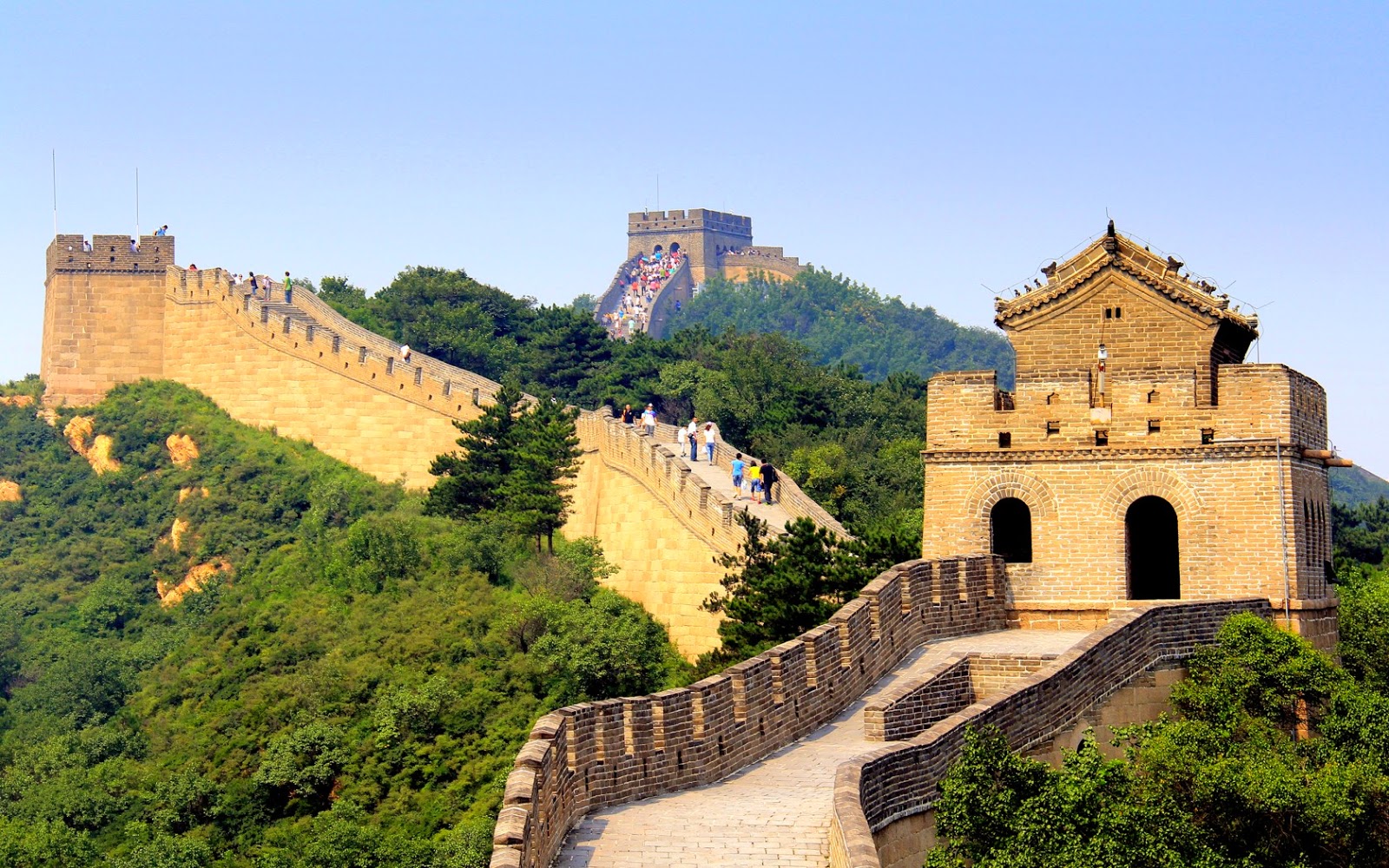
They should build a wall to keep out the barbarians...
...oh wait...
But seriously, I have thought for years that China will invade North Korea. It makes sense as a conventional and cyber warfare "warm-up" for some real conflicts, and would ingratiate themselves to the West (and to Sony Pictures).
A spate of murders by North Koreans inside China’s border is prompting some residents to abandon their homes, testing China’s ability to manage both the 880-mile (1,400-kilometer) shared frontier and its relationship with the reclusive nation.
The violence reflects a growing desperation among soldiers, including border guards, since Kim Jong Un took over as supreme leader in Pyongyang three years ago. As well as seeking food, they are entering China to steal money.
Wednesday, April 16, 2014
Pulled Pork
Being a resident of the great city of New Orleans (the only city in the U.S. that feels to an American as though you are treaveling abroad), I am exposed to more than my fair share of great cuisine. And I must say the roast beef and pulled pork here is also delicious just about anywhere you go...any meat that becomes so juicy than you can "pull" it apart is bound to be wonderful.
So speaking of meat that can be pulled apart, the U.S. is faced with a myriad number of challenges. It is as though the pack of wolves that is the rest of the world collectively smells the blood trail of the a mighty wounded bear.
The Ukraininan/Russian situation is providing all sorts of cover (several reports indicate an Al-Quieda backed attack on Baghdad itself) for operatives around the world to probe, test, and evaluate if they can break from cover and seize interests.
An interesting time, and I half expect a missile test from North Korea right...about...
Monday, March 15, 2010
The exchanges between China and the U.S...
...Have been wonderfully entertaining to witness. It seems the media across the world had been busy over the weekend in order to function as the equivalent of a school playground instigator ("hey, did you hear what Bobby said about you?).
In any case, the substantive issue in this verbal game of Chicken that encompasses exchange rates and trade policy is whether or not demand from somewhere, anywhere, can soak up China's huge overcapacity. Since it appears clear that China will not enjoy the kind of trade surplus (either by currency realignment or more aggressive tariffs) it must now engineer demand. Instead, it opted to increase industrial capacity even more in the hopes of outlasting this recession, in effect doubling down on its mercantilist wager. This has a very, very high probability of failure as globalization 3.0 will not be kind to this kind of imbalance. The world has changed and failure to adapt to the new conditions in countries that previously ran huge trade imbalances with China is a mistake.
China's position as a pseudo-crony capitalist state will be exposed with underwriting standards on loans to communist party members (with strict orders to make exportable goods) approaching the level of diligence on sub-prime "liar" loans.
China has much more to lose here. It is unfortunate that the current executive administration does not realize this.
And all of this is happening in a regime only slightly less opaque than its neighbor North Korea. The numbers simply have to be much, much worse than the "official" figures coming out of Beijing would have us believe.
Not a good situation, and I am pleased the world appears to finally be catching up to these issues I have been trying to bring forth to our collective attention for years.
In any case, the substantive issue in this verbal game of Chicken that encompasses exchange rates and trade policy is whether or not demand from somewhere, anywhere, can soak up China's huge overcapacity. Since it appears clear that China will not enjoy the kind of trade surplus (either by currency realignment or more aggressive tariffs) it must now engineer demand. Instead, it opted to increase industrial capacity even more in the hopes of outlasting this recession, in effect doubling down on its mercantilist wager. This has a very, very high probability of failure as globalization 3.0 will not be kind to this kind of imbalance. The world has changed and failure to adapt to the new conditions in countries that previously ran huge trade imbalances with China is a mistake.
China's position as a pseudo-crony capitalist state will be exposed with underwriting standards on loans to communist party members (with strict orders to make exportable goods) approaching the level of diligence on sub-prime "liar" loans.
China has much more to lose here. It is unfortunate that the current executive administration does not realize this.
And all of this is happening in a regime only slightly less opaque than its neighbor North Korea. The numbers simply have to be much, much worse than the "official" figures coming out of Beijing would have us believe.
Not a good situation, and I am pleased the world appears to finally be catching up to these issues I have been trying to bring forth to our collective attention for years.
Thursday, April 11, 2013
I can hear...
...the cheering at the Pentagon all the way from here in New Orleans with regard to the "threats", nuclear and otherwise emanating from the bankrupt nation of North Korea.
Like my previous post intimated, this is all theater in one fashion or another, and it would not surprise The Recapitulator in the least if there was some quid pro quo occurring.
Like my previous post intimated, this is all theater in one fashion or another, and it would not surprise The Recapitulator in the least if there was some quid pro quo occurring.
Wednesday, December 28, 2011
Producing volatility
...in order to beg for relevancy. This is no different from the more lurid and prurient representations we have heard from "shock radio" or gangster rap.
The word "reprobate" comes to mind...
The UN general assembly granted a request from North Korea to hold a moment of silence for Kim Jong-il, the country's former leader who died on Saturday. The tribute was boycotted by western delegations. Nassir Abdulaziz al-Nasser, president of the 193-nation assembly, called for the minute of silence before the start of a routine meeting
The word "reprobate" comes to mind...
The UN general assembly granted a request from North Korea to hold a moment of silence for Kim Jong-il, the country's former leader who died on Saturday. The tribute was boycotted by western delegations. Nassir Abdulaziz al-Nasser, president of the 193-nation assembly, called for the minute of silence before the start of a routine meeting
Thursday, April 23, 2015
A small reminder...

of what totalitarian rule decays into. The border mark delineates North Korea, in all its spendor.
Subscribe to:
Posts (Atom)